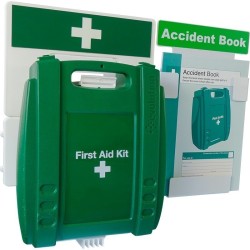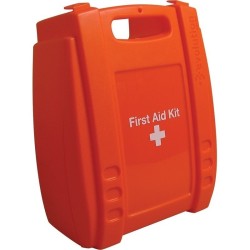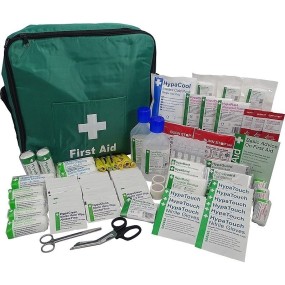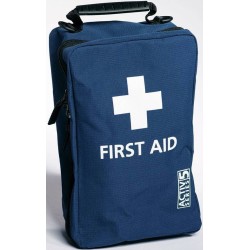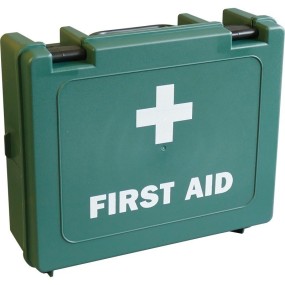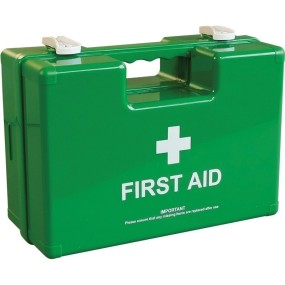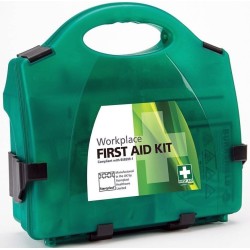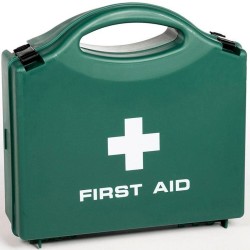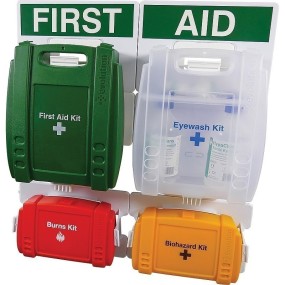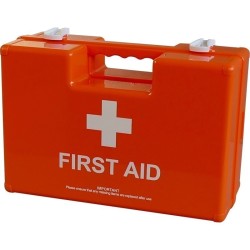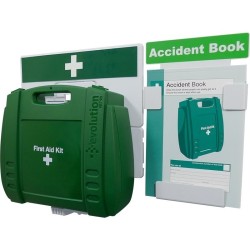
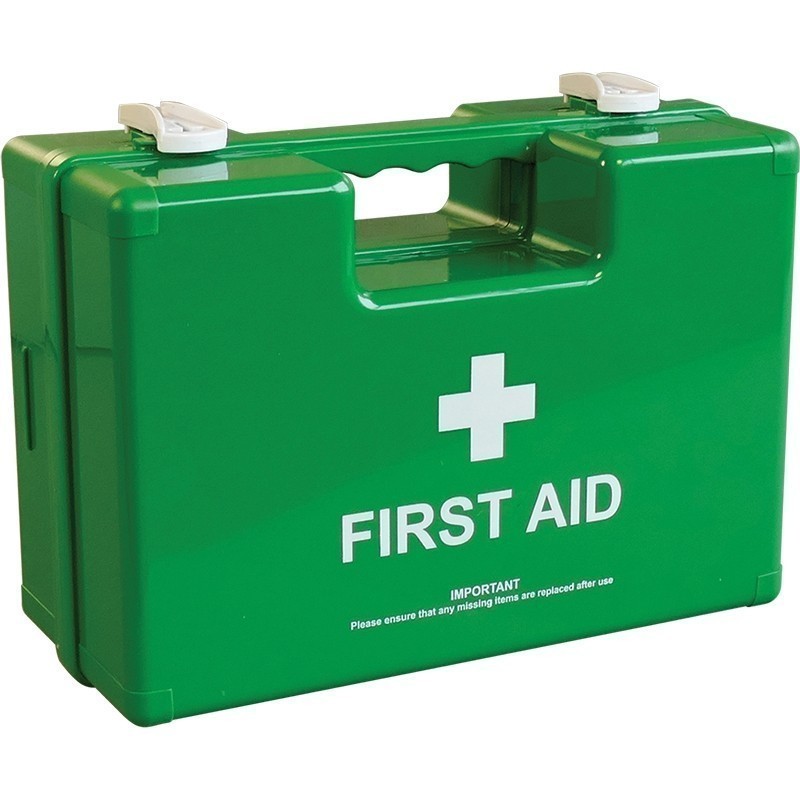


The Industrial High-Risk BS8599-1 large first aid kit provides maximum enhanced provision for high-risk workplaces with over 25 employees. Contains 21 categories of first aid supplies at the highest quantities, including the full suite of industrial additions for environments with significant exposure to chemical, mechanical, and physical hazards.
| Contents | Qty |
|---|---|
| First Aid Guidance Leaflet | 1 |
| First Aid Dressings 12x12cm | 6 |
| First Aid Dressings 18x18cm | 4 |
| Triangular Bandages | 4 |
| Eye Dressings | 4 |
| Washproof Plasters | 100 |
| Sterile Wipes | 40 |
| Microporous Tape 2.5cm x 5cm | 3 |
| Nitrile Gloves (Pair) | 12 |
| Finger Dressings | 4 |
| Face Shield | 2 |
| Foil Blanket | 3 |
| Burn Dressing 10cm x 10cm | 2 |
| Clothing Cutters | 1 |
| Conforming Bandage 7.5cm | 2 |
| Skin Closure Strips | 10 |
| Eye Wash Pods 20ml | 10 |
| Adhesive Dressings 8x6cm | 10 |
| Adhesive Dressings 10x8cm | 6 |
| Disposable Aprons | 2 |
| Clinical Waste Sacks | 2 |
Compliance Summary: This kit provides the highest tier of enhanced BS 8599-1:2019 provision for high-risk environments. Multiple large high-risk kits should be deployed across dispersed industrial sites. The enhanced contents address HSE guidance on first aid provision for workplaces with elevated risk of chemical exposure, lacerations, and contamination.
How many large high-risk kits does a construction site need?
The number depends on site layout, workforce size, and hazard distribution. HSE guidance recommends that first aid equipment is accessible from all work areas within a reasonable time. For large construction sites, position kits at welfare cabins, plant areas, and high-activity zones. Your site-specific first aid needs assessment should document the required number and placement.
Are the clinical waste sacks in this kit suitable for biohazard disposal?
The clinical waste sacks included are designed for the safe containment of used dressings, gloves, and other contaminated first aid materials generated during treatment. They should be disposed of according to your workplace waste management procedures. For environments generating regulated clinical waste, consult your waste management contractor for appropriate disposal routes.