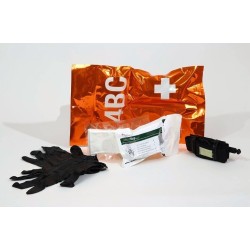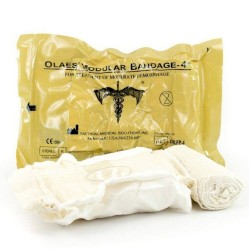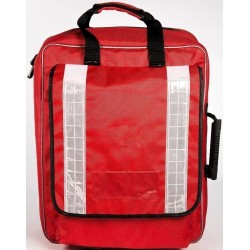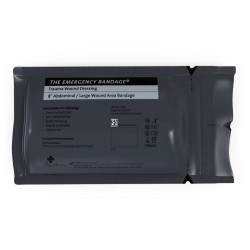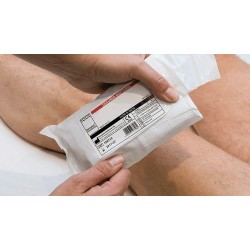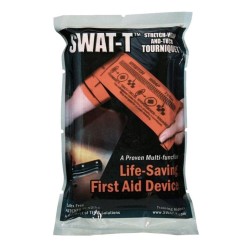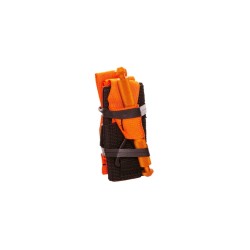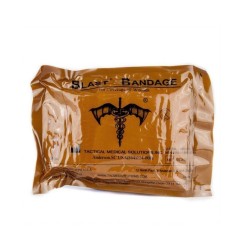
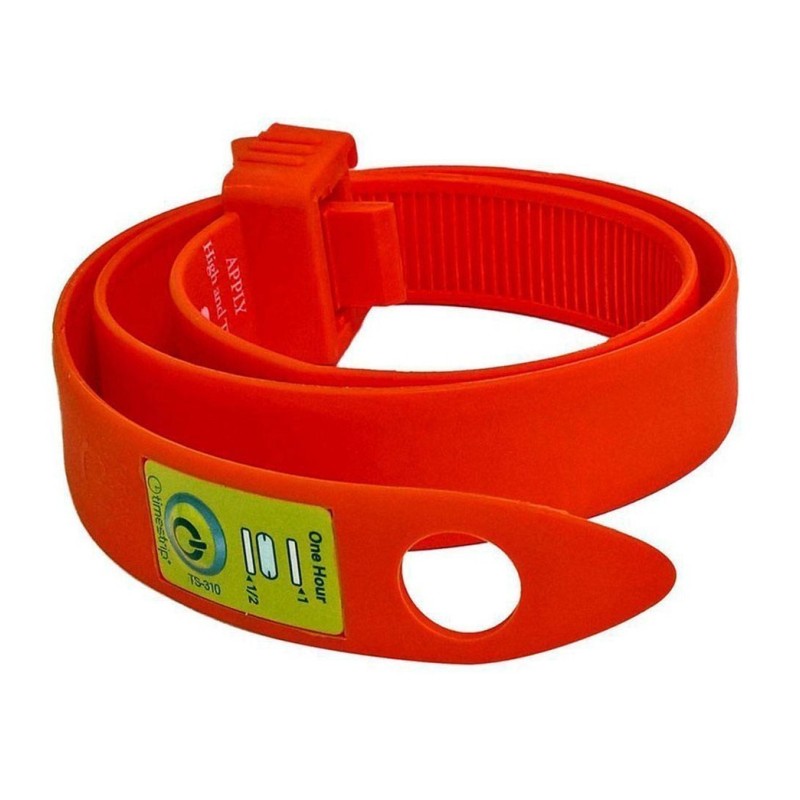


The S.T.A.T. (Smart Technical Application Tourniquet) is designed for catastrophic bleeding control with particular focus on mass casualty treatment scenarios. The simplified application mechanism enables rapid sequential deployment across multiple bleeding casualties, making it suited to major incident response where time-per-casualty is critical for overall survival outcomes.
Compliance Summary: The STAT tourniquet is a medical device for emergency limb haemorrhage control. Designed for mass casualty scenarios where rapid sequential tourniquet application across multiple patients is required. Training in tourniquet application is mandatory.
What makes the STAT suited to mass casualty events?
The STAT uses a simplified mechanism designed for speed across multiple applications. In a mass casualty event, the responder may need to apply tourniquets to several casualties in rapid succession. The STAT reduces the time and cognitive load per application, enabling faster progression through the casualty chain.
Is the STAT as effective as the C-A-T or SOFTT-W?
The STAT achieves effective arterial occlusion for catastrophic limb bleeding. Its design prioritises speed of application across multiple casualties. The C-A-T and SOFTT-W are optimised for individual application reliability. All are effective tourniquets - selection depends on the anticipated use scenario and training protocol.