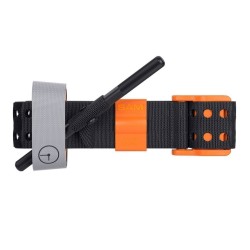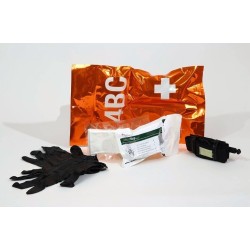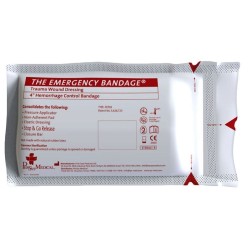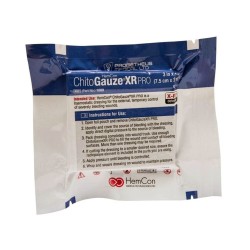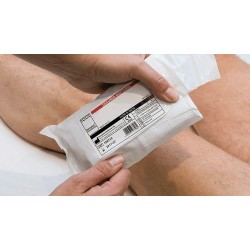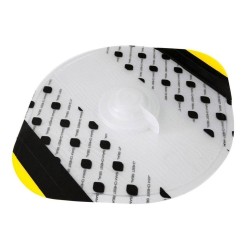
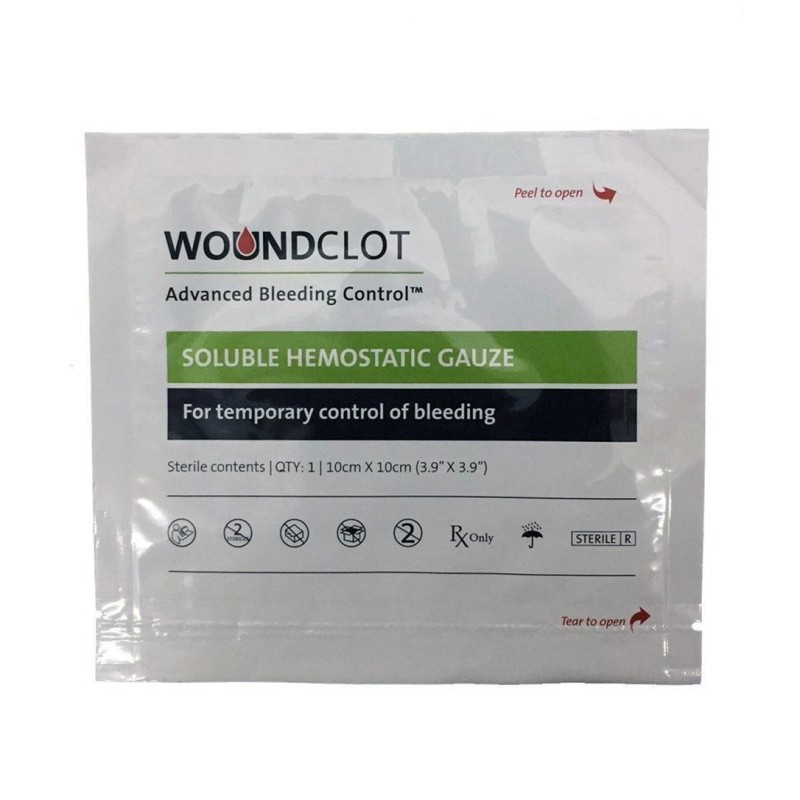


WoundClot is a bio-absorbable haemostatic dressing using regenerated cellulose technology for temporary control of traumatic bleeding. The dressing is absorbed by the body over time, eliminating the need for painful removal from the wound site. Used in military and civilian trauma response for moderate to severe haemorrhage where direct pressure alone is insufficient.
Compliance Summary: WoundClot is a medical device using bio-absorbable regenerated cellulose technology. The dressing is designed for temporary haemorrhage control in emergency situations and is used by military and civilian emergency services worldwide.
What does bio-absorbable mean?
Bio-absorbable means the dressing material is gradually broken down and absorbed by the body after application. This eliminates the need to remove the dressing from the wound, which can disrupt the clot and restart bleeding. The cellulose matrix is safely absorbed during the natural wound healing process.
How does WoundClot differ from chitosan-based dressings?
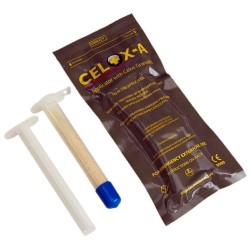
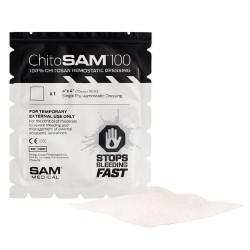
WoundClot uses regenerated cellulose technology while products like Celox and ChitoSAM use chitosan. Both accelerate clot formation but through different mechanisms. WoundClot is bio-absorbable, meaning it does not need to be removed. Chitosan dressings are not absorbable and must be removed by clinical staff during definitive wound treatment. Both are effective haemostatic technologies.