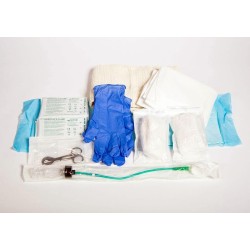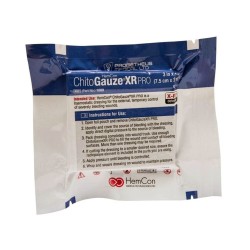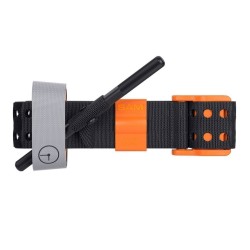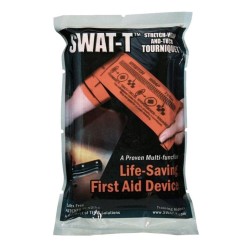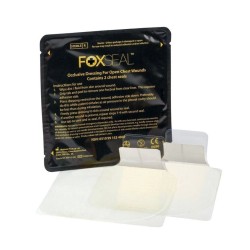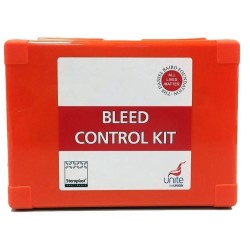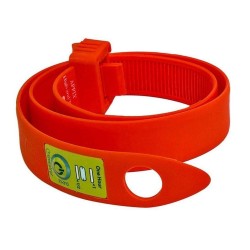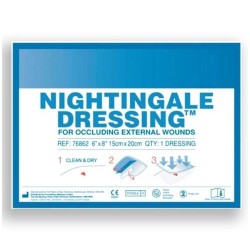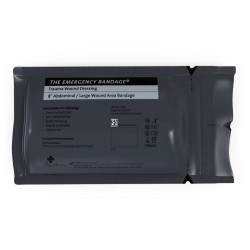
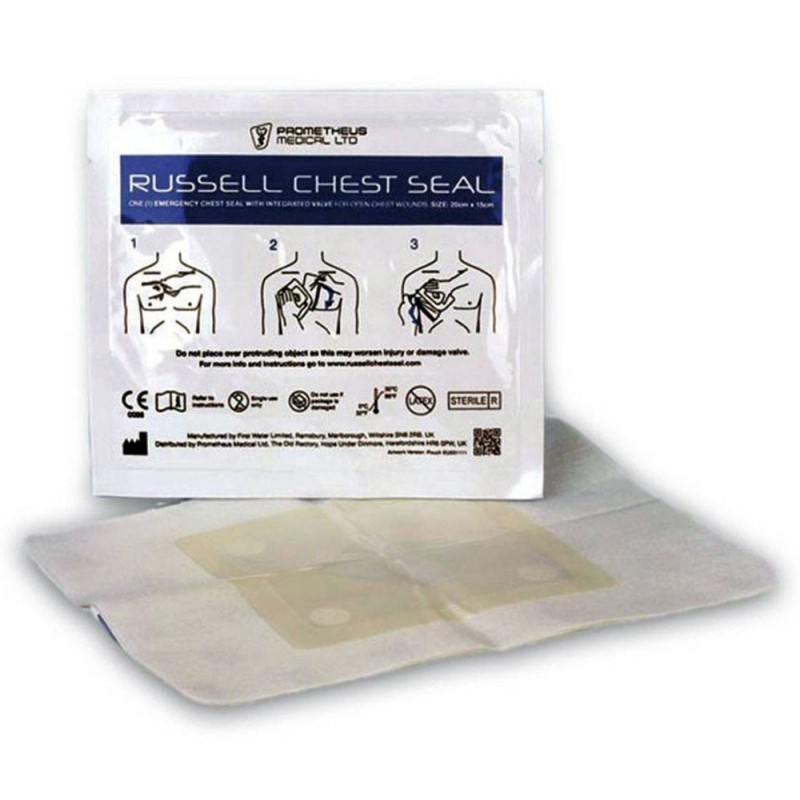


The Russell chest seal is an occlusive dressing for penetrating chest wounds, covering the wound while allowing trapped air to escape from the pleural cavity without being drawn back in during breathing. Used by paramedics, military medics, and trained trauma responders for pre-hospital management of pneumothorax caused by stab wounds, gunshot wounds, and other penetrating chest injuries.
Compliance Summary: The Russell chest seal is a medical device for emergency management of penetrating chest trauma. This product is designed for use by personnel trained in chest seal application and pneumothorax recognition. Incorrect application can compromise respiratory function.
What is a pneumothorax?
A pneumothorax occurs when air enters the pleural space between the lung and chest wall, typically through a penetrating wound. The trapped air compresses the lung, causing breathing difficulty and potentially life-threatening respiratory compromise. A chest seal covers the wound to prevent further air entry while allowing trapped air to escape through the valve mechanism.
How is the Russell chest seal applied?
Clean the skin around the wound, peel the adhesive backing, and apply the seal directly over the penetrating wound with the valve positioned centrally. The adhesive must form a complete seal around the wound edges. Monitor the casualty's breathing continuously and be prepared to burp the seal if a tension pneumothorax develops. This procedure requires specific training.